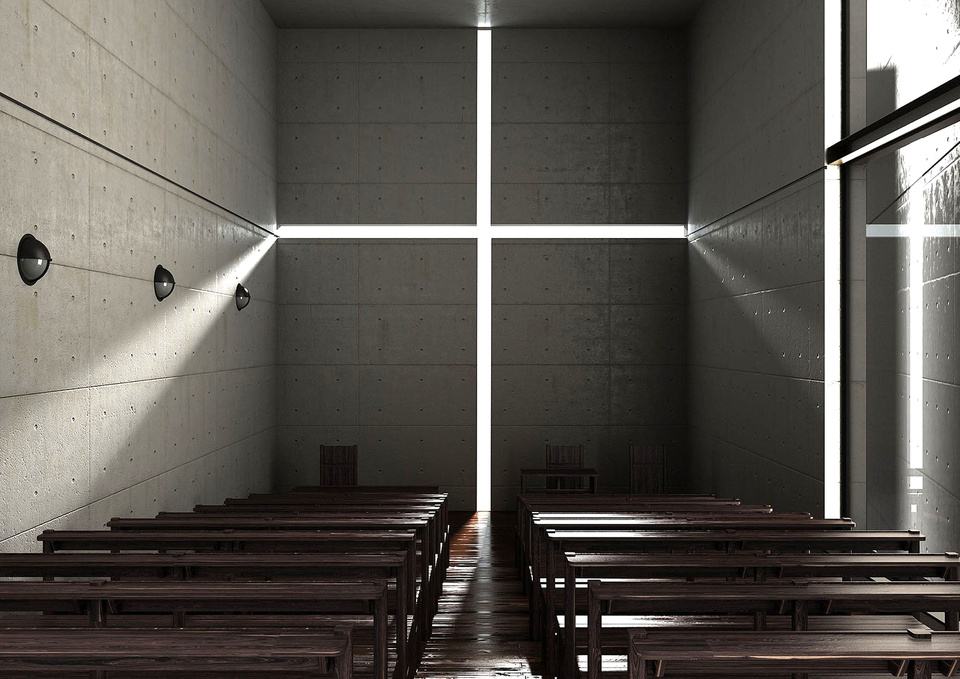
Design Studio 2 · Designer Presentation
TADAO
ANDO
Three ideas that decide everything he builds.
Presented by Andy Nguyen · Zid
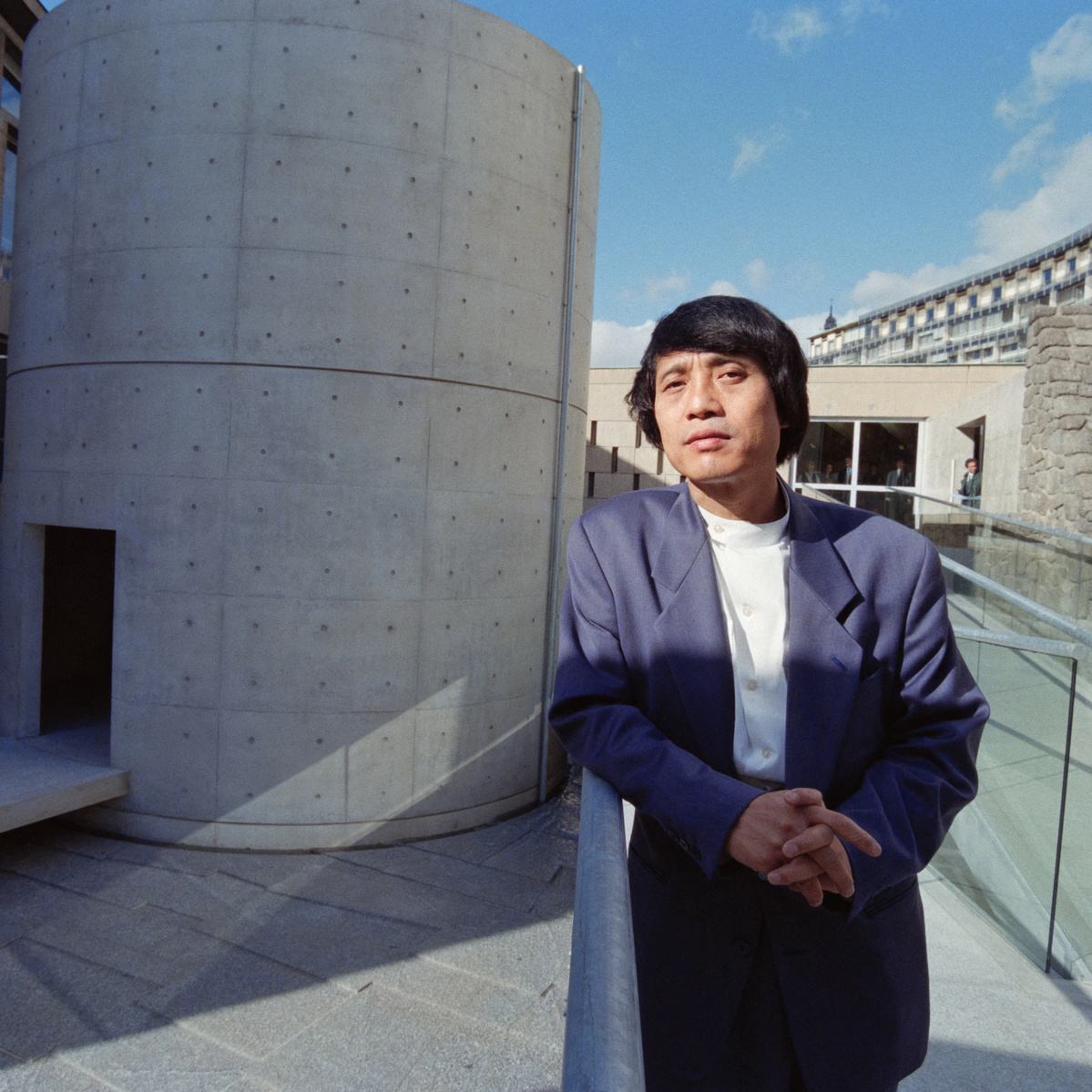
01 — Who
A boxer who never went to architecture school.
- Born Osaka, 1941. Raised by his grandmother in a row-house district.
- Licensed professional boxer at seventeen.
- No degree. He taught himself by buying Le Corbusier's collected works second-hand and tracing every drawing until the book fell apart.
- Travelled Europe, Africa and the US through the 1960s, drawing in notebooks.
- Opened his practice in Osaka, 1969. It is still there.
02 — The field
Architecture — including the parts nobody pays for.
- Houses, churches, museums, galleries, public landscape. Every scale from one row house to a whole island.
- Pritzker Prize, 1995 — the field's highest award.
- He gave the prize money to children orphaned by the Kobe earthquake that same year.
- Never opened a second office.
Philosophy 01
Architecture should stay silent, and let nature do the talking.
“I don't believe architecture has to speak too much. It should remain silent and let nature in the guise of sunlight and wind.”
He grew up in a post-war Osaka that had pushed nature out. So he does not decorate with plants — he abstracts nature down to light, water, wind and sky, then frames it so you cannot ignore it. The building goes quiet on purpose.
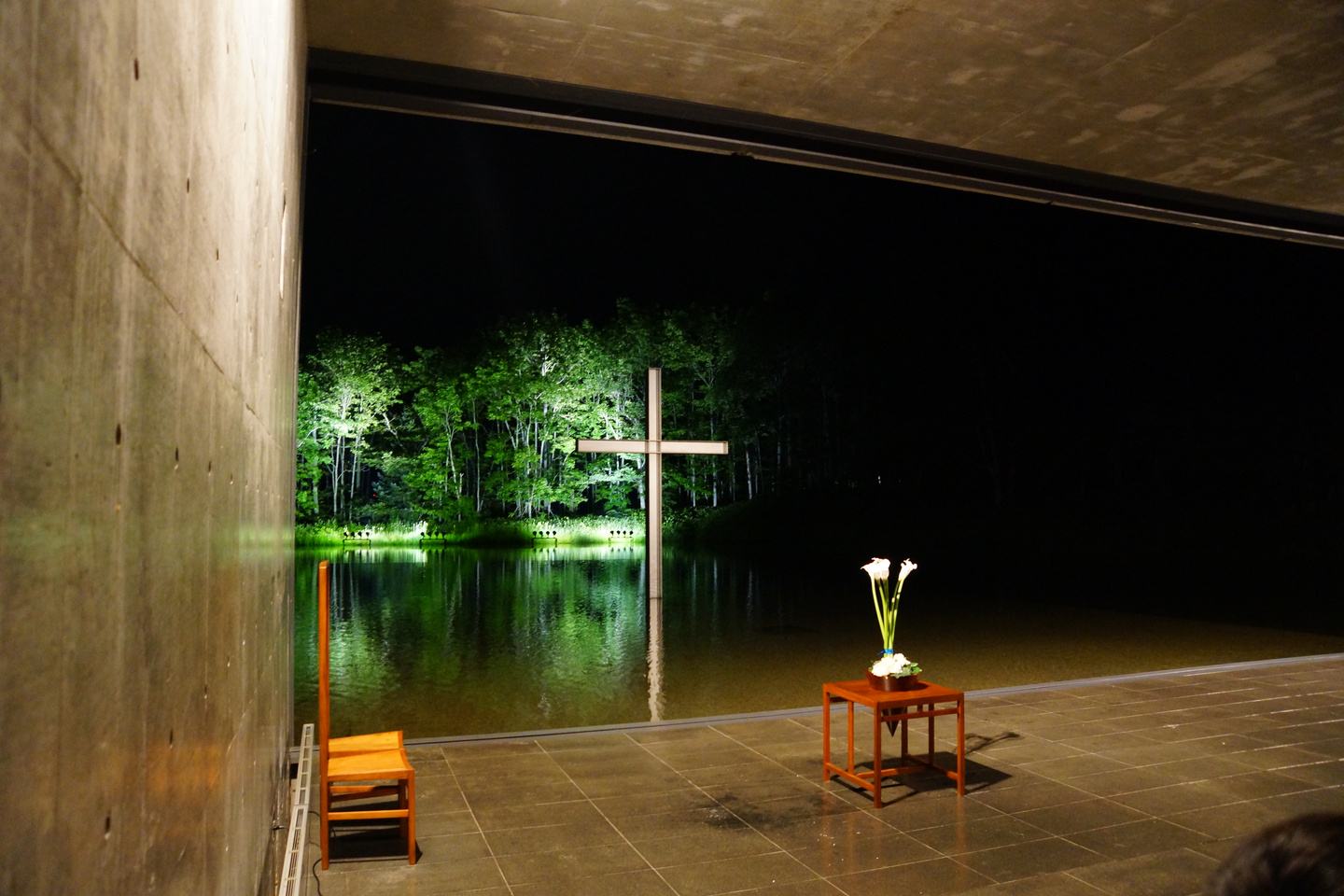
Church on the Water · Tomamu, Hokkaido · 1988
There is no altar. The wall slides away and a steel cross stands out in a man-made pond. The building stops, and the landscape becomes the thing you face.
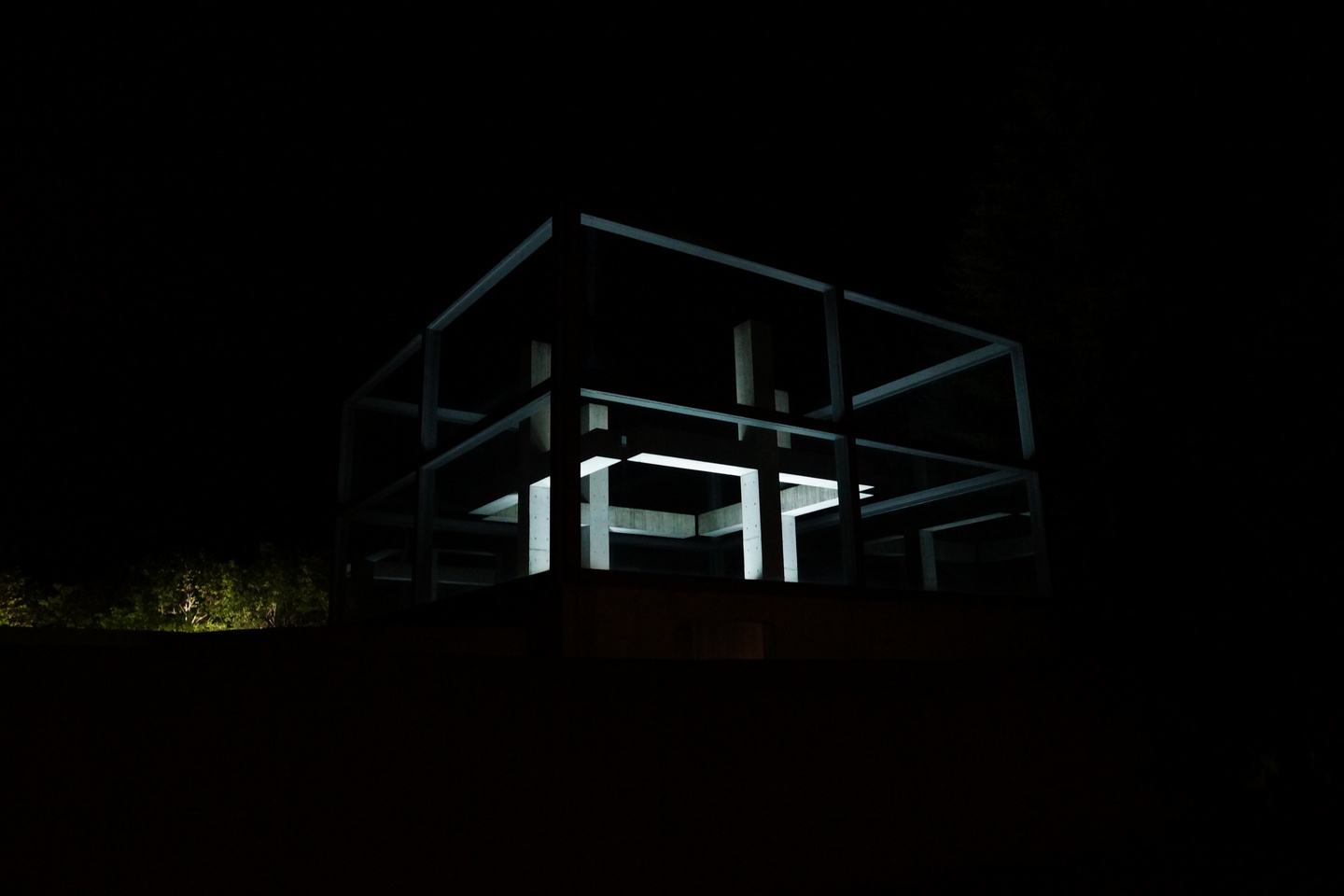
The same room, after dark
Everything he built disappears. What he framed is all that is left.
Philosophy 02
Give people nothing, and they will fill it themselves.
“If you give people nothingness, they can ponder what can be achieved from that nothingness.”
He designs by removing, and the emptiness is the gift — not the leftover. He will bury a museum so there is nothing to look at but light, or make you cross an open courtyard in the rain to reach your own bedroom. Discomfort is how he makes you pay attention.
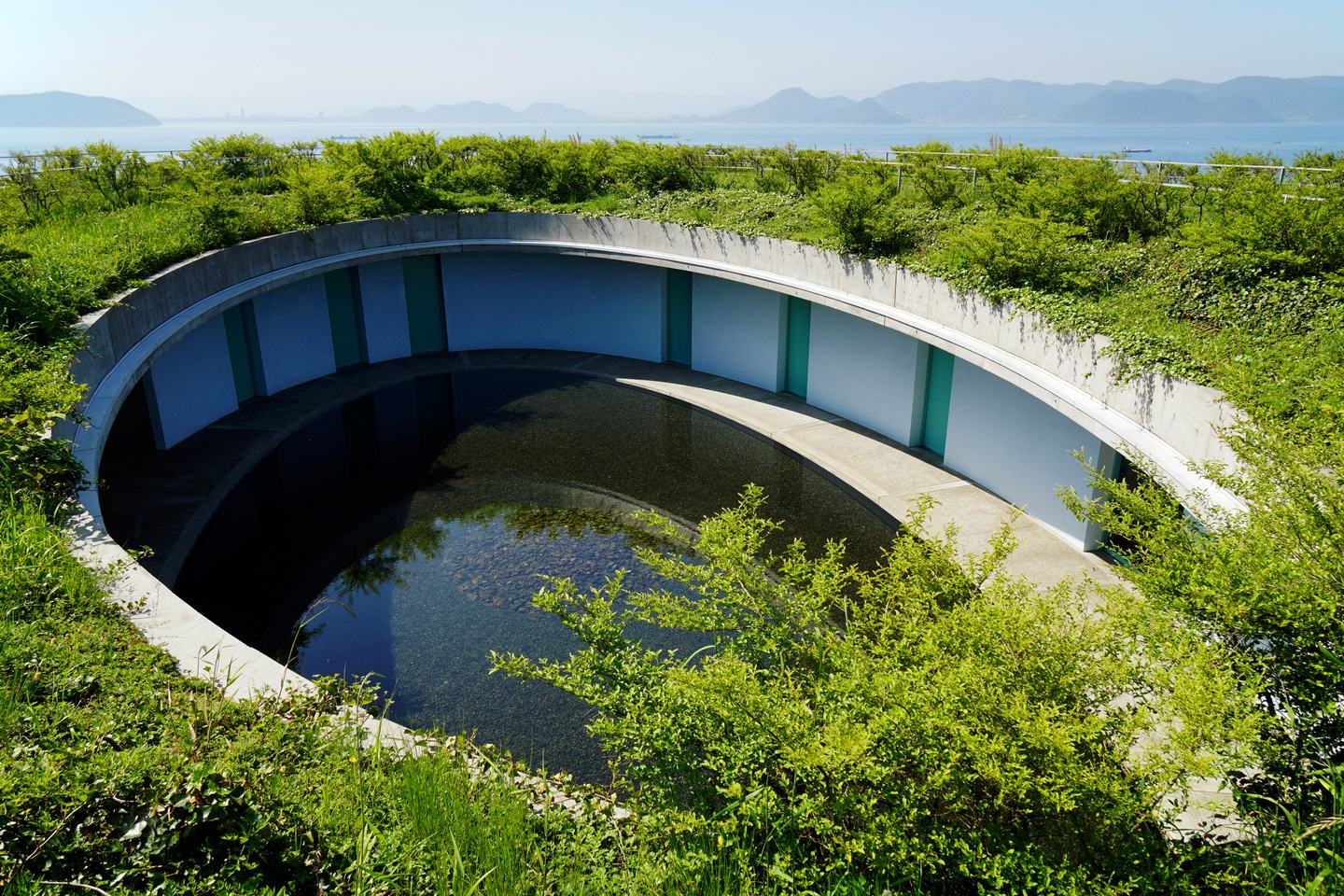
Benesse House Oval · Naoshima · 1995
A hotel on a hilltop, built around a hole. The most valuable space in the building is the one with nothing in it.
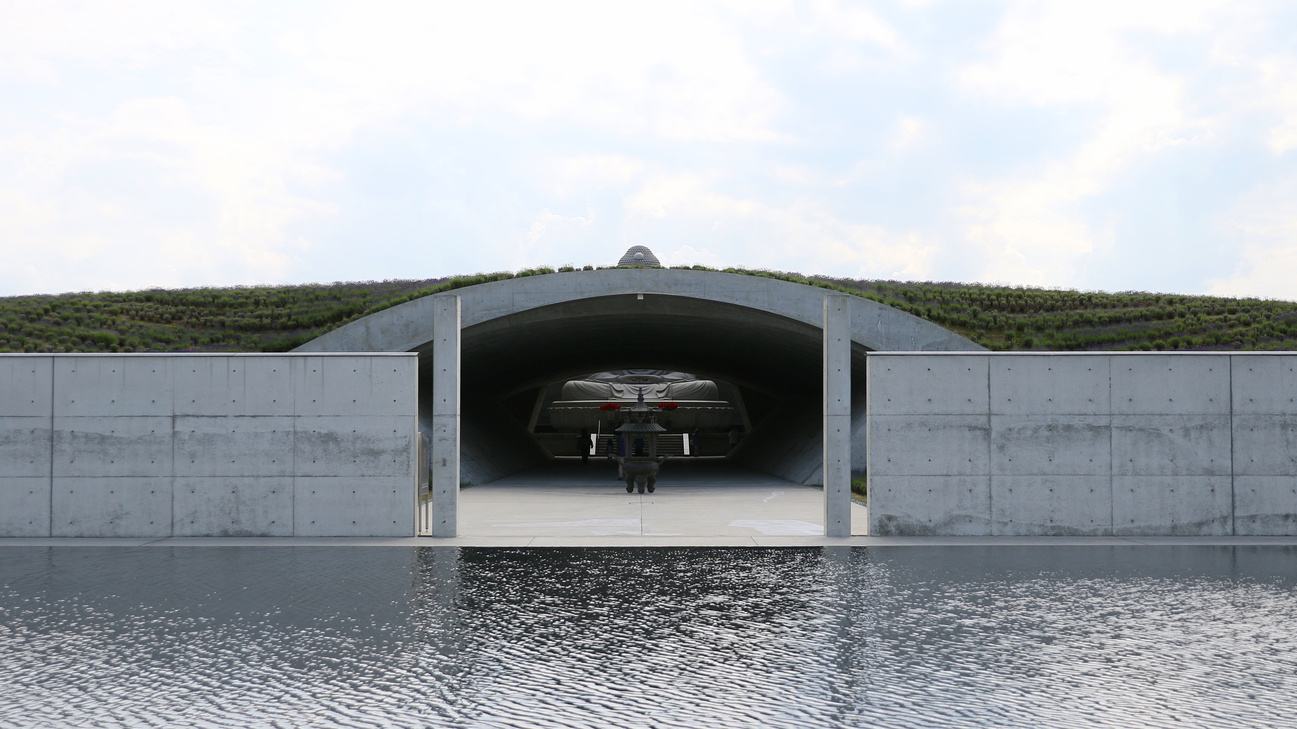
Hill of the Buddha · Sapporo · 2015
A 13-metre Buddha already stood here. Ando buried it in a lavender hill so only the head shows, and made you walk a long tunnel to reach it. He hid the thing people came for, so that arriving would mean something.
Philosophy 03
Treat an industrial material with the discipline of a craft.
“I like ruins because what remains is not the total design, but the clarity of thought, the naked structure, the spirit of the thing.”
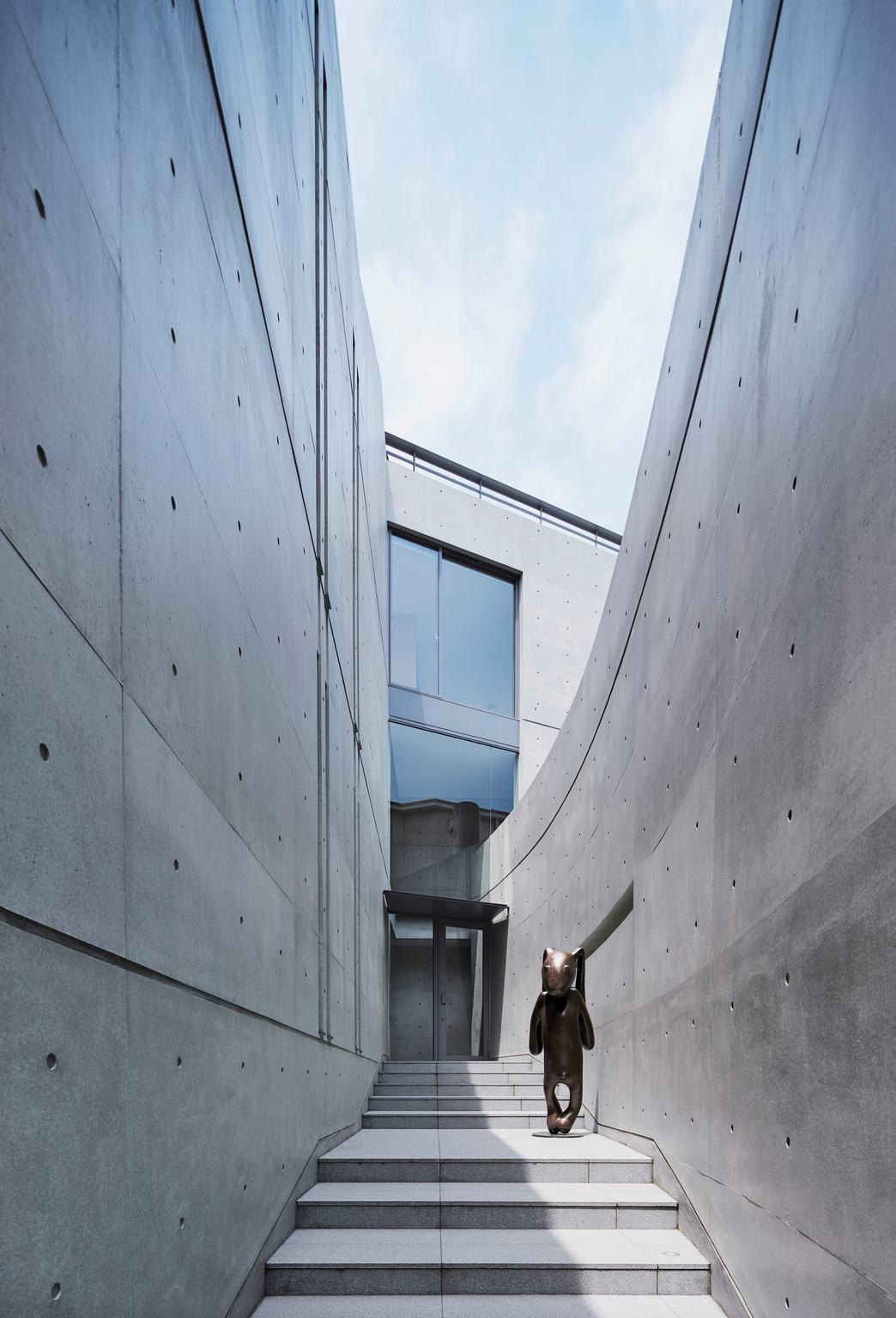
Concrete is cheap, rough and everywhere. He finishes it like lacquerware — surfaces sanded smooth, formwork set to a fixed module, the tie-holes laid on a grid as deliberate as tatami. Self-taught from Le Corbusier, disciplined by Japanese making. That fusion is his position, and it is why his walls are never painted.
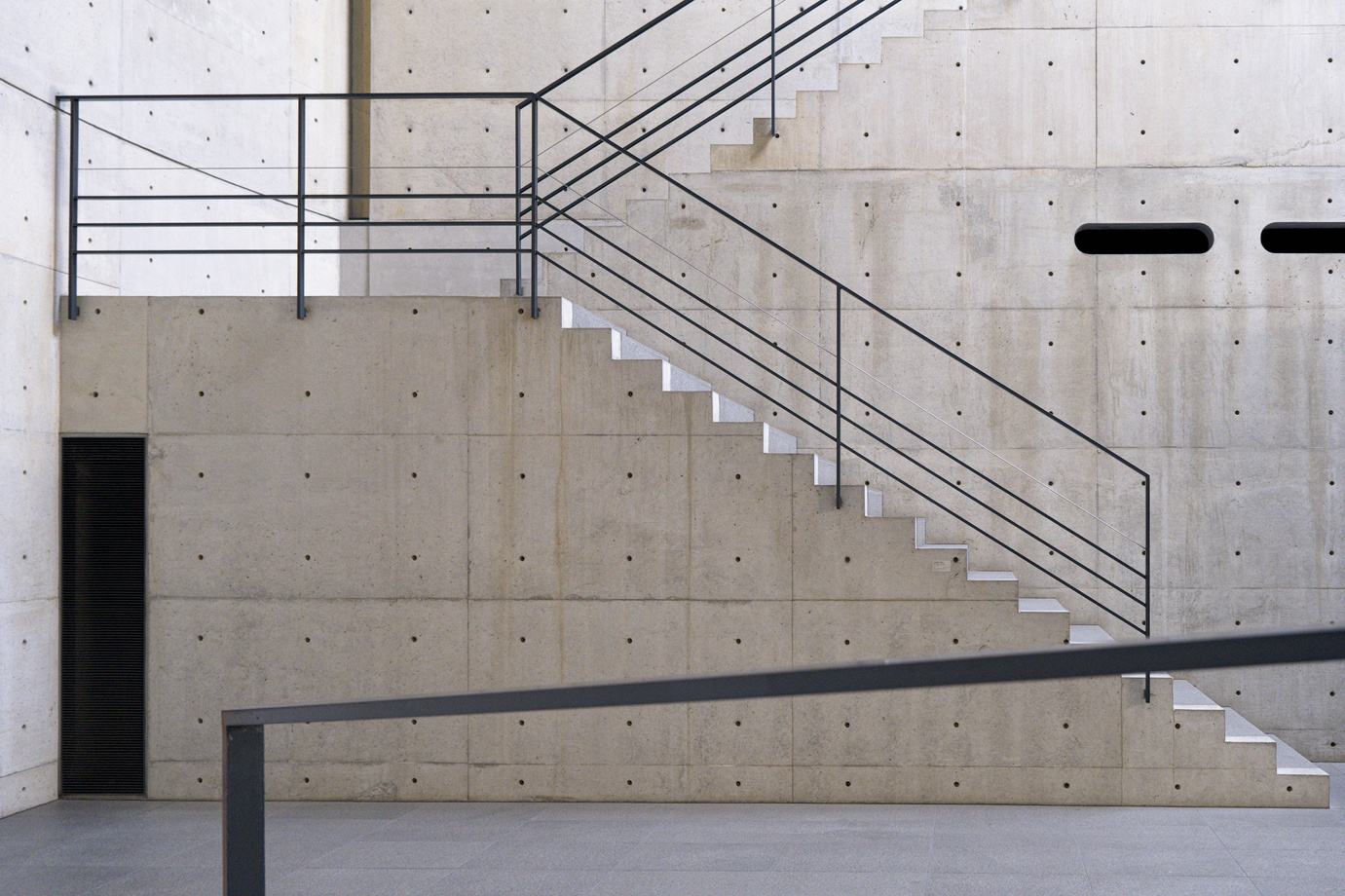
Naoshima · board-formed concrete
Six tie-holes per panel, the same rectangle every time. Nothing is hidden and nothing is accidental — how it was made is the finish.
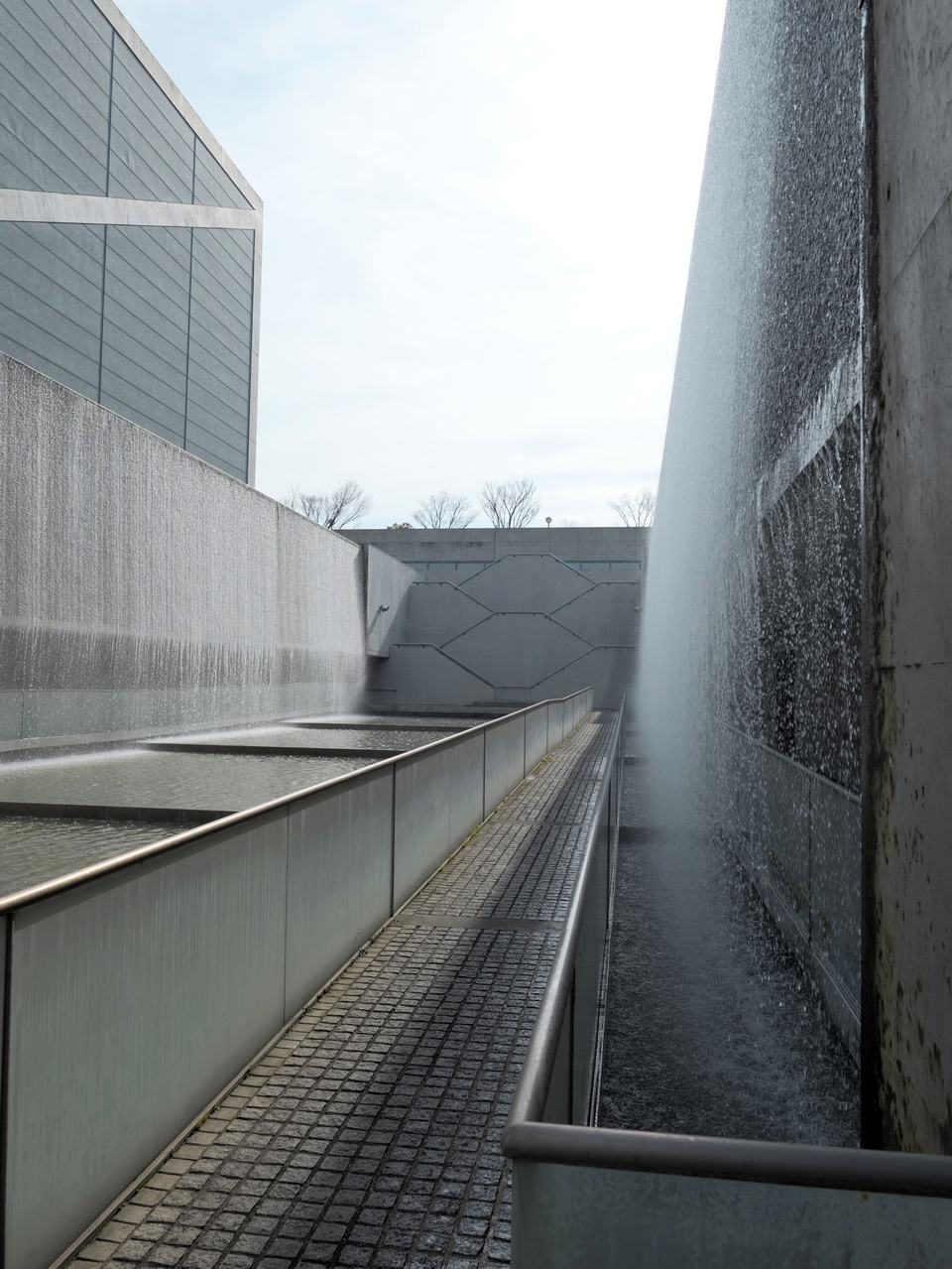
Sayamaike Museum · Osaka · 2001
You enter down a concrete canyon with a sheet of water falling beside you. All three ideas at once: nature abstracted to falling water, a corridor that gives you nothing, and a wall finished to the millimetre.
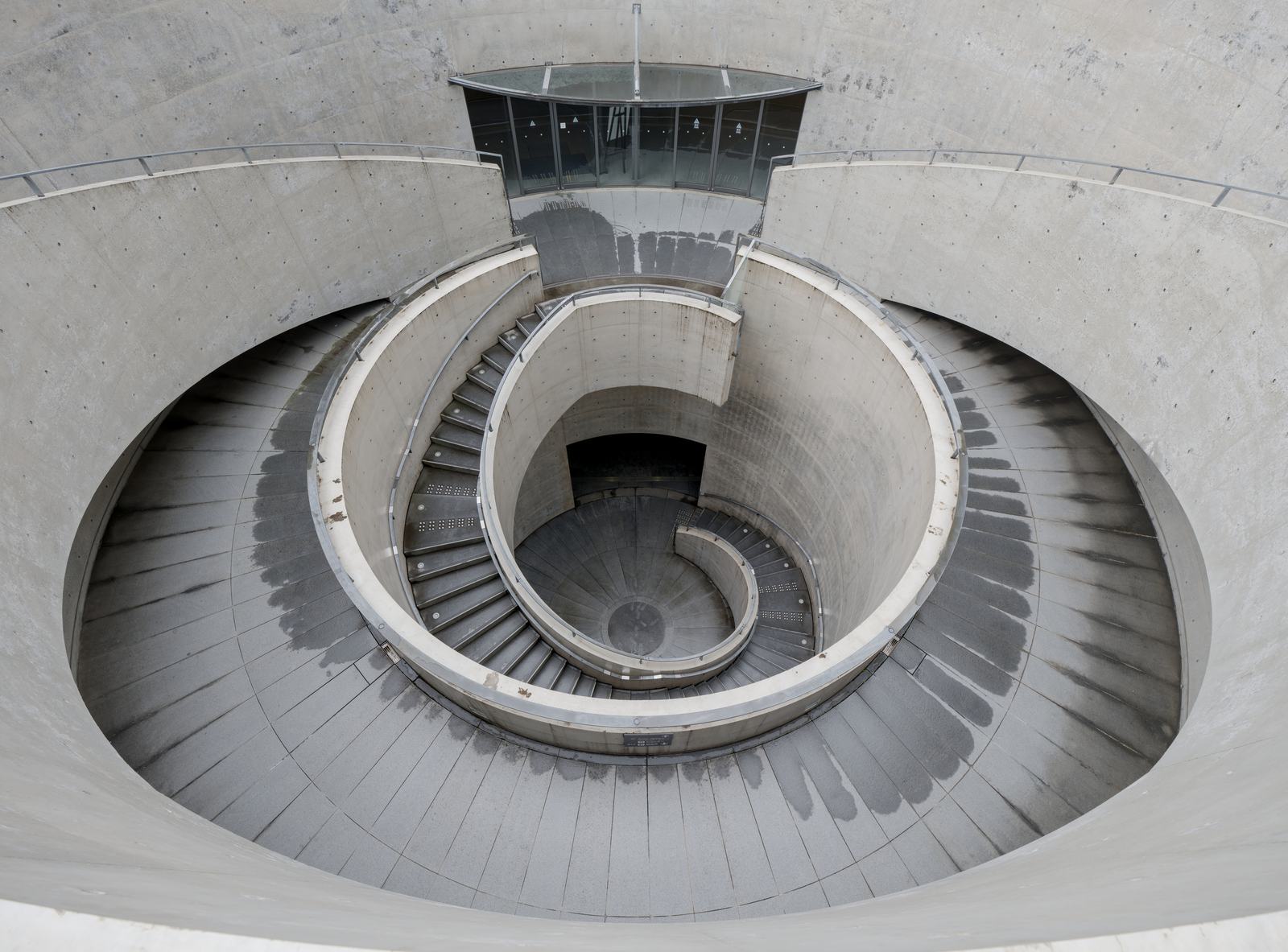
Hyogo Prefectural Museum of Art · Kobe · 2002
A stair inside a glass drum. Pure geometry, no ornament, and the only decoration is the shadow it casts on itself.
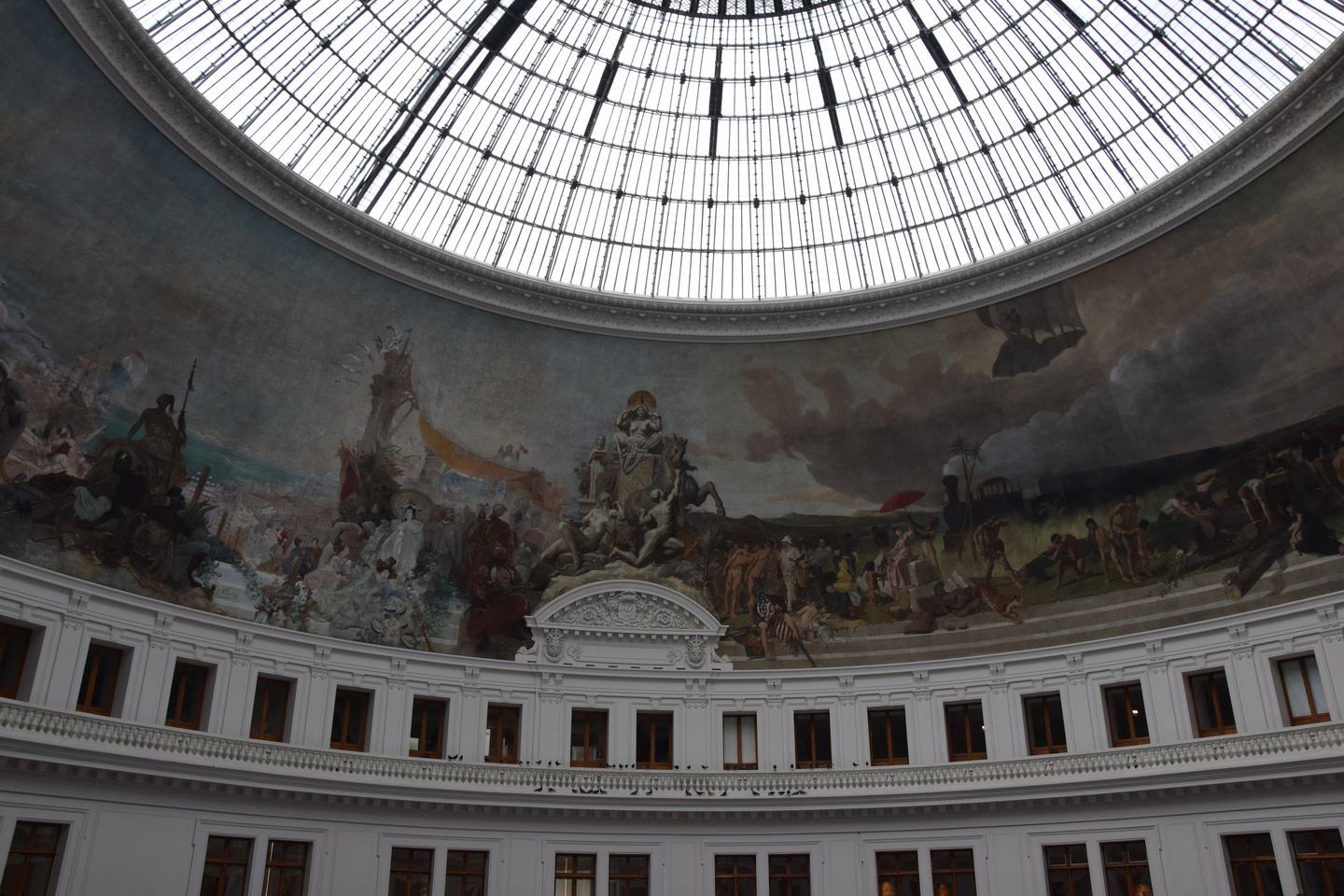
Three ideas, one architect
- 01Build quietly, so nature is what speaks.
- 02Take things away — emptiness is the gift.
- 03Finish a common material like a craft object.
“Simplicity, but also depth. Simplicity without depth is merely cheap.”
Presented by Andy Nguyen · Zid — Design Studio 2 · 2026 TPC